Oak Gall Disease Threatens St. Louis Trees: Prevention and Management Tips

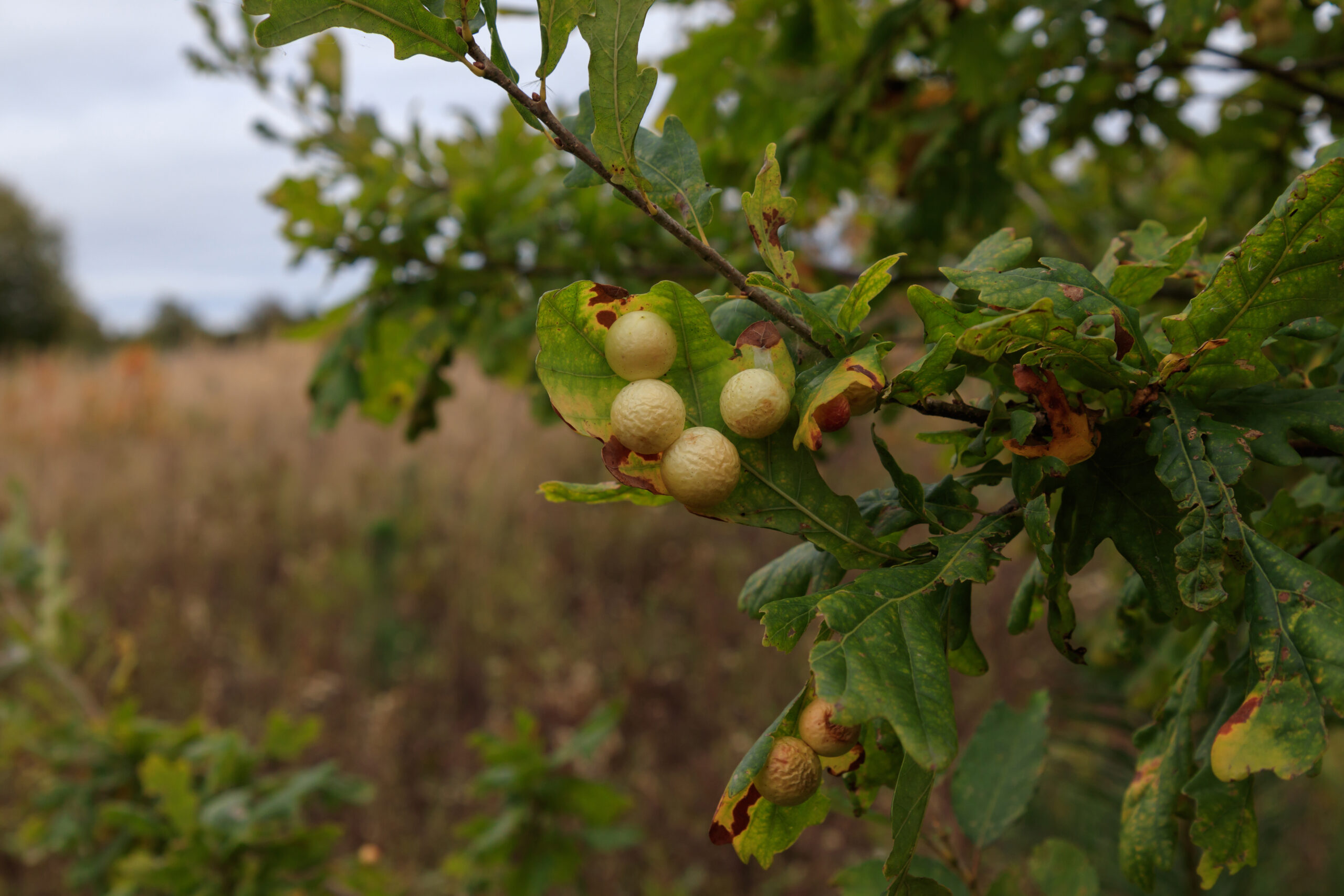
Are you noticing strange growths on your oak trees? These unsightly bumps and knots could be a sign of oak gall disease. This year there have been a significant increase in the number of trees affected by oak call in St. Louis, especially pink oaks which were widely planted in our region during the 1950s and ’60s. Oak gall is more than just an eyesore; it can harm your trees if not properly treated. Let’s dive into what oak gall is, how to identify it, and what you can do about it.

What is Oak Gall?

Oak galls are abnormal growths or swellings on oak trees caused by various species of small gall wasps. When these tiny wasps lay their eggs on oak leaves, branches, or twigs, a chemical reaction stimulates the tree to produce these growths. Galls provide both food and protection for the developing wasp larvae.

Common Types of Oak Galls:

  • Leaf Galls: Appear as round, spiky, or fuzzy balls on the leaves.
  • Twig Galls: Hard, woody swellings on twigs and branches.
  • Root Galls: Unusual formations found underground on the roots.

Signs Your Oak Tree Might Have Galls:

  • Unusual Growths: Look for round, spiky, or bumpy growths on leaves, branches, or twigs.
  • Leaf Damage: Leaves have holes or look irregular.
  • Dying Trees: Infestations can weaken or even kill parts of the tree.

Why You Should Be Concerned: Severe infestations can damage trees, making them susceptible to other diseases and pests. In extreme cases, this can lead to significant branch dieback or even the death of the tree.

How G&G Lawn & Tree Can Help
At G&G Lawn & Tree, we offer comprehensive oak gall treatment services. Our experts can assess the extent of the infestation and recommend the best course of action. Treatments might include:

  • Pruning: Removing and destroying infested branches to reduce the gall wasp population.
  • Chemical Treatments: Applying appropriate insecticides to control wasp populations and prevent further gall formation.
  • Tree Health Care: Improving overall tree health through proper fertilization and watering, making them more resilient to infestations. Infected trees can also be removed safely by our crews.

Our Proven Tree Care Process:

  1. Inspection: Thorough assessment of your oak trees to identify the presence and severity of galls.
  2. Treatment Plan: Customized plan to address the specific type of gall and infestation level.
  3. Implementation: Skilled application of treatments by our certified arborists.
  4. Follow-Up: Monitoring and follow-up visits to ensure the treatment’s effectiveness can be scheduled.

Alternatives to Oak Trees: Native Missouri Trees to Consider

If your oak trees are severely affected or if you’re looking to diversify your landscape, consider planting these alternative native Missouri trees:

  • Eastern Redbud (Cercis canadensis): Beautiful pink flowers in spring, heart-shaped leaves, and minimal maintenance.
  • American Hornbeam (Carpinus caroliniana): Attractive blue-green leaves that turn vibrant shades in fall, great for small yards.
  • Serviceberry (Amelanchier arborea): White spring blossoms, edible berries, and brilliant fall color.
  • Missouri Pecan (Carya illinoinensis): Provides shade and produces delicious nuts.
  • Sugar Maple (Acer saccharum): Famous for its vibrant fall foliage and syrup production.

These trees are not only resistant to oak gall but also support local wildlife and enhance the beauty of your landscape.
Dealing with oak gall can be challenging, but with the right approach, you can protect your oak trees and maintain a beautiful yard. At G&G Lawn & Tree, we’re here to help you every step of the way. From diagnosis to treatment and follow-up care, we ensure your trees get the best care possible. If you suspect your trees are suffering from oak gall, don’t hesitate to contact us for a professional tree consultation. Let’s work together to keep your trees healthy and your landscape thriving.

Most homeowners like to plant new trees on their property because they are typically low-maintenance plants. However, that doesn’t mean they are no maintenance. As self-sufficient as they may seem, healthy trees need care, especially when they are first planted. Help your new trees thrive and grow healthy with a few of our new tree care tips!

Tidy Trees

Take some time to clean up around your trees, making sure the area is tidy with landscaping.

  • Remove any debris from around your new trees like sticks, fallen fruit or leaves.
  • Once all debris is cleared away, inspect tree trunk for signs of pest activity or disease. You can save a tree from dying by treating your trees as soon as you notice any problems. If your unsure of what you are looking at, just take a photo and send it to our tree care team!
  • It’s more than just tacky to leave holiday lights up on your trees year-round. Objects bound to your trees for too long can actually hinder future growth.


Fresh Mulch

A fresh layer of mulch helps to retain soil moisture and suppress weeds. This is especially important for younger trees or any of your landscape trees up to 10 years old. Mulch can also help trees absorb needed nutrients, keeping the, healthy and beautiful.

Tree Pruning

Usually the recommended time to prune trees in the Midwest is during the winter months when tree growth slows. However, any time of the year is a good time to prune trees to benefit structural integrity or to remove problematic tree limbs that may pose a hazard to your family or property. Visually inspect your trees for any damaged, dead, or hazardous branches. If you’re uncertain if a tree limb might cause problems, contact a local tree care service company.

Watering Trees

Newly planted trees usually need more water than well-established trees. Especially in St. Louis, you should monitor rainfall and drought conditions to make sure young trees or saplings are getting enough water. This is especially important during our hot, summer months and winter. Many homeowners forget about watering plants and tree when it’s cold outside, so be sure to pay attention to watering advisories. G&G Lawn & Tree is committed to posting important information on watering your landscape plants on our Facebook page. Follow us there as a reminder of when it’s especially important to give your landscape plants a good soak.

Professional Tree Care

Not every tree job should be performed by an untrained homeowner. For large tree pruning, tree removal or maintenance, it’s important to consult with a tree care expert who can work with you to identify problem areas, giving your trees the expert attention, they need to grow healthy and strong!

There are many different reasons why homeowners contact a St. Louis, Missouri tree removal company. Large trees are beautiful and provide us and our yards with a wide variety of benefits, but sometimes these trees may need to be trimmed, pruned or completed removed. Tree removal can be a dangerous job that should only be carried out by experienced professionals who know what they are doing. Due to various risks and dangers, only licensed and insured tree companies have the special equipment and expertise needed to ensure the safety of your home and property.  (more…)

St. Louis and the surrounding Midwest area can get some pretty serious summer storms. Summertime thunderstorms, hail and even tornadoes can damage and weaken even well established trees. If your landscape trees do become damaged after a storm event, it’s important to know what you’re looking at.

At G&G Lawn &  Tree, our expert tree care team is here to help you, with some common signs you may notice when you’re evaluating your trees after a storm event.

Examine Tree Roots

Some tree types grow stem girdling roots that encompass the tree’s trunk. Over time, these roots can affect the overall health of the tree and its root system, leading to trunk weakness or even a fallen tree. This is especially true for most maple trees.

Check Weak Branches

It’s common for many types of trees to form narrow or weak points where certain branches meet. Check your tree’s branches regularly for areas that may break off during a storm. You may find areas that would benefit from tree pruning or other tree care services, to help eliminate future damage to your tree or surrounding property.

Tree Trunk Inspection

A tree trunk is the tree’s longest and strongest area. Check for obvious signs of decay or damage on all of your trees to make sure your tree is supported properly by a healthy trunk.

If you notice any of things on your trees, it’s important to contact a tree care service for help. Our team works quickly to make sure your trees are safe and sound. If you do need emergency tree removal following a storm event, contact us! We provide expert landscaping and tree removal services to the St. Louis area and beyond and would be happy to help.

Contact us at 636-296-3499 or email us at Lori@gandg.cc for professional advice for your trees. We would be happy to look at a photo of your tree or visit your property to provide free recommendations and custom pricing for your tree care needs.

Most families have long-lasting memories associated to their home and the long-living trees standing around the property. However, a dying tree can be a real danger to both your property and your family’s safety. (more…)